Water leak sensors can help detect leaks early, but can they detect hidden leaks behind walls or beneath floors? A pipe can leak without leaving a visible puddle, and a toilet can waste water for weeks. Whether a sensor detects the problem depends on where the water travels and how the system monitors it.
So, can water leak sensors actually detect hidden leaks?
Yes, but only under certain conditions. Traditional water leak sensors detect water when it reaches their sensing contacts. They don’t detect moisture through walls or floors.
That’s where understanding the difference between water sensors and water-flow monitoring becomes important.
Why a Water Leak Sensor Might Miss a Leak
Imagine placing a water leak sensor beneath your kitchen sink.
If a pipe connection starts leaking and water collects around the sensor, it can trigger an alert.
But what if the water runs down the back of the cabinet, enters the wall, or collects somewhere the sensor cannot reach?
The sensor stays dry, even though there’s a leak.
This is one of the biggest misunderstandings about water leak sensors: they monitor specific locations, not your entire plumbing system.
The same limitation applies to several common problems:
- Pipes behind walls: Water may remain concealed without reaching a sensor.
- Leaking toilets: Water passing from the tank into the bowl won’t trigger a floor sensor.
- Leaks beneath flooring: Water can collect under the floor without appearing near a sensor.
These limitations don’t make water leak sensors ineffective. They simply mean sensor placement and the type of leak matter.
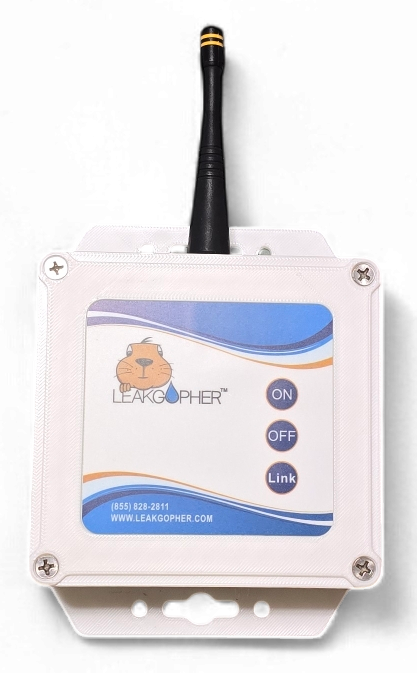
[PHOTO 1: Actual Leak Gopher sensor positioned beneath a sink, showing where water would need to collect to trigger detection.]
What About Leaks You Can’t See?
This is where water-flow monitoring becomes useful.
Unlike a moisture sensor, a water-flow monitor measures water moving through your plumbing.
For example, if a pipe behind a wall develops a leak, the water flowing through that pipe may create an unusual usage pattern.
A compatible flow-monitoring system may identify that pattern even if no water reaches a floor sensor.
However, flow monitoring has limitations too. Very small leaks may fall below the system’s detection threshold, and unusual water use doesn’t always mean there’s a leak.
Here’s a simple comparison:
|
Situation |
Floor sensor |
Flow monitor |
|
Water beneath a sink |
Can detect it |
May detect unusual flow |
|
Pipe leaking behind a wall |
Usually misses it |
May identify abnormal usage |
|
Toilet leaking into the bowl |
Cannot detect it |
May identify unusual usage |
|
Roof leaking during rain |
Can detect collected water |
Cannot detect it |
The key difference: A floor sensor looks for water where it shouldn’t be. A flow monitor looks for unusual water movement through the plumbing.
Neither can detect every possible leak.
How Leak Gopher Combines Both Approaches
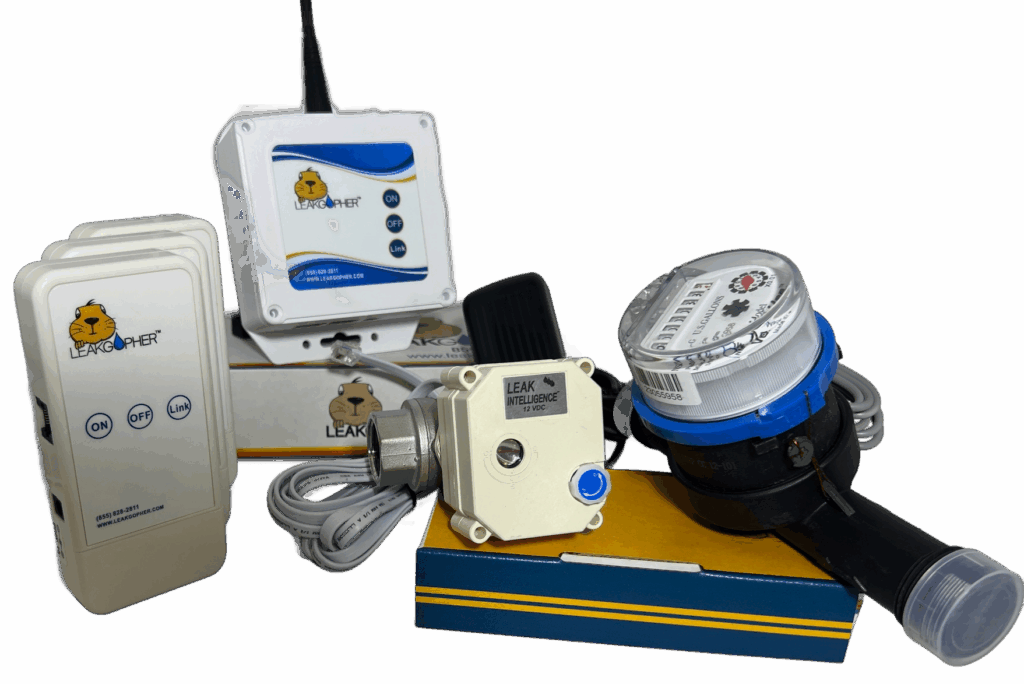
Leak Gopher offers water leak detection systems that combine physical water sensors, water-flow monitoring, and compatible automatic shutoff valves.
Its physical sensors monitor locations where water may collect, such as beneath sinks or near appliances.
The Leak Gopher Water Meter monitors water usage and can identify unusual flow patterns that may indicate a plumbing problem.
When the system detects a qualifying condition, a compatible electronic valve can automatically shut off the water according to its configuration.
This provides two different ways to recognize potential problems: water reaching a sensor and unusual water usage.
It doesn’t guarantee detection of every hidden leak, but it can provide broader monitoring than relying on floor sensors alone.
[PHOTO 2: Actual Leak Gopher water meter or cellular system installation.]
How Can You Check for a Hidden Leak Right Now?
Before purchasing additional equipment, try a simple water meter test.
- Turn off faucets, appliances, and irrigation systems that use water.
- Record your home’s water meter reading.
- Avoid using water for approximately two hours.
- Check the meter again.
If the reading has increased, investigate whether water is being used unexpectedly.
The U.S. Environmental Protection Agency recommends checking your water meter as one way to identify possible household leaks.
A changing meter reading doesn’t tell you exactly where the problem is, but it can help you decide whether further investigation is needed.
The Bottom Line
Water leak sensors are useful, but they aren’t designed to detect every leak in a home.
A sensor beneath your sink may detect water collecting in the cabinet while missing a pipe leaking behind the wall.
Water-flow monitoring can help identify certain hidden plumbing problems by detecting unusual water usage.
For broader protection, consider a system that combines appropriately placed sensors, water-flow monitoring, and compatible automatic shutoff equipment.
Learn more about Leak Gopher’s water leak detection and automatic shutoff solutions to see how these technologies work together.